In this article
- 1.Introduction
- 2.What a Calorie Deficit Actually Means
- 3.Why Calorie Tracking Usually Breaks Down
- 4.Where AI Food Scanning Helps
- 5.Calories First, Macros Second
- 6.Why Scanned Calories Still Need Review
- 7.How to Use AI Food Scanning for a Calorie Deficit
- 8.What People Get Wrong About Calorie Deficits
- 9.Where Emorya Fits
- 10.Sources and Further Reading
- 11.FAQs
- 12.Conclusion
Key takeaway
AI food scanning is useful when it makes calorie intake easier to see, review, and compare with daily activity
It does not create a calorie deficit by itself, but it can reduce tracking friction and help people understand whether their routine is moving toward the deficit they intended.
Primary signal
Calorie intake is the clearest starting point when the goal is deficit awareness.
Lower friction
Food scanning can make meal logging faster than starting every entry by hand.
Human context
Portions, oils, sauces, and second servings still need user judgement.
Intake + burn
The useful view is how food intake sits beside activity and calorie burn over time.
Related next steps
Useful follow-ons if you want to connect calorie intake with the bigger routine.
Introduction
Food tracking usually fails for a simple reason: it asks too much from normal life.
Most people do not want to weigh every ingredient, search every database, rebuild every recipe, or turn a quick lunch into a manual admin job. That friction matters, because calorie management only becomes useful when someone can repeat it often enough to see a pattern.
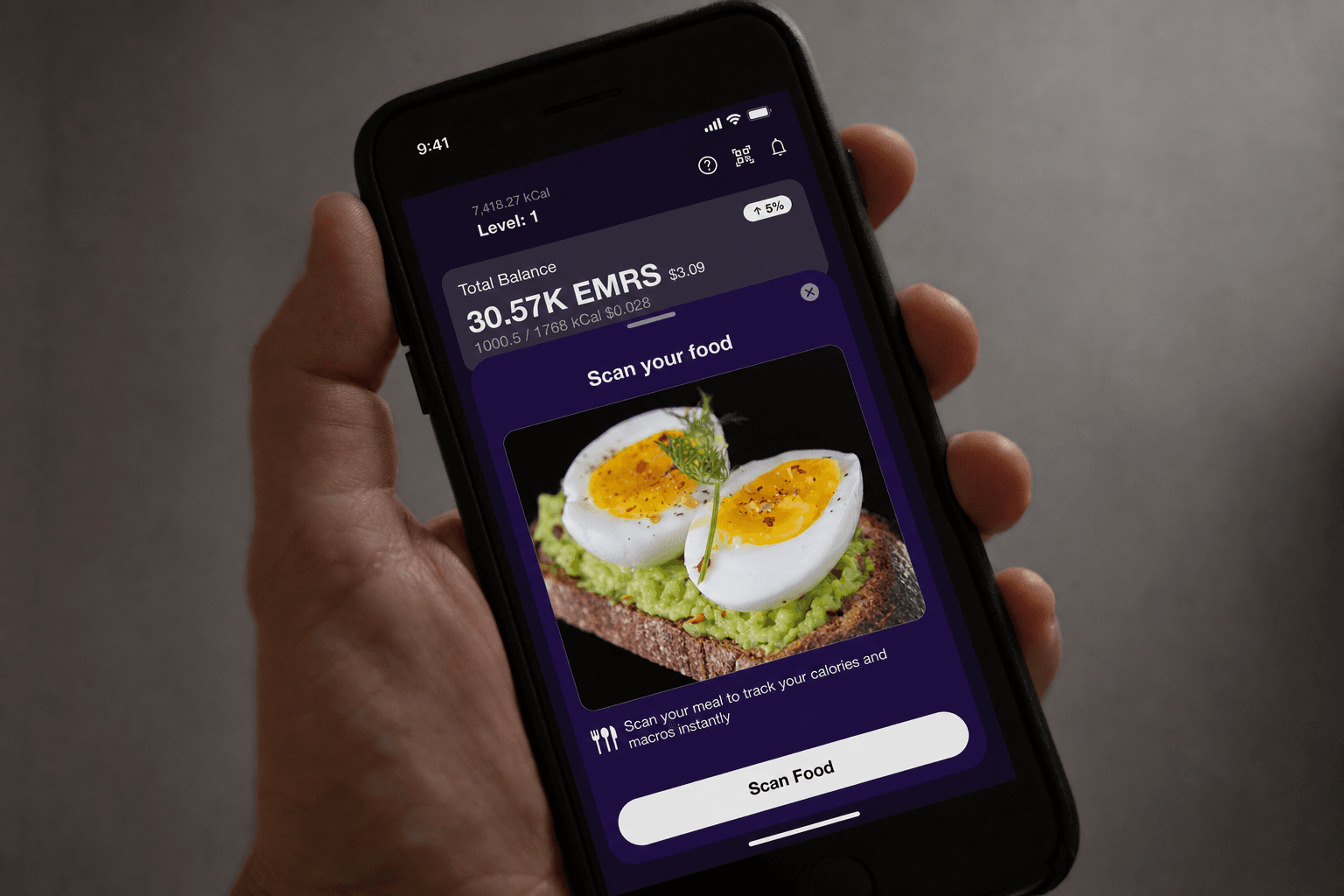
That is where AI food scanning becomes interesting. Instead of starting from a blank search field, the user starts with a photo. The scanner gives a first estimate, the user reviews it, and the meal becomes part of the same daily picture as movement, calorie burn, habits, and rewards.
The important shift is this: Emorya is not treating food scanning as a macro novelty. The primary value is calorie awareness inside a wider calorie balance loop.
Macros still matter. Protein, carbohydrates, and fats can help explain hunger, training, recovery, and food quality. But if the goal is calorie deficit management, the first question is more basic: how much energy is coming in, how much energy is being used, and what does that look like across time?
What a Calorie Deficit Actually Means
A calorie deficit is often described too aggressively, as if it means eating as little as possible. That is not the useful version.
A calorie deficit means your average energy intake is lower than your average energy use over time. The body uses energy for basic functions, digestion, daily movement, and exercise. Food and drink provide energy. If intake regularly exceeds what the body uses, weight can increase over time. If energy use regularly exceeds intake, the body may use stored energy.
That does not mean every day needs to be perfect. It does not mean one meal decides the outcome. It does not mean someone should treat food like a punishment system.
The practical version is calmer: understand the normal pattern, adjust what is repeatable, and keep the deficit sustainable enough to live with.
This is why calorie management needs visibility. If someone does not know roughly what they are eating, it is difficult to know whether the problem is portion size, frequent snacking, liquid calories, takeaway habits, low movement, weekends, or unrealistic targets.
Why Calorie Tracking Usually Breaks Down
The theory of calorie tracking is simple. The daily experience is not.
Meals are messy. Portions vary. Oils disappear into pans. Sauces hide in bowls. Restaurant meals rarely match neat database entries. Snacks get forgotten. Drinks count too. A meal that looks healthy can still be calorie dense, and a day that feels active can still be outpaced by intake.
That is why manual calorie tracking often becomes exhausting before it becomes useful. The user is asked to be consistent, accurate, and patient at the exact moment the system is making everything feel more complicated.
The tracking problem is not only accuracy. It is friction.
If logging takes too long, people stop. If the numbers feel judgemental, people avoid them. If the system demands perfection, it becomes easier to ignore the system altogether.
AI food scanning does not solve every accuracy problem, but it can solve part of the friction problem. That matters because a slightly imperfect pattern that people can actually maintain is often more useful than a perfect system they abandon after three days.
Where AI Food Scanning Helps
An AI food scanner uses computer vision and nutrition data to interpret a meal image. In simple terms, it tries to identify the foods in the photo, match them to likely nutrition information, and turn that into an estimate the user can review.
For calorie management, that estimate can help in a few practical ways:
- It can make meal logging faster than manual entry.
- It can help users notice calorie intake they may otherwise forget.
- It can show how snacks, sauces, drinks, and portion sizes affect the day.
- It can connect food intake with activity, calorie burn, and progress signals.
- It can make daily balance easier to understand without turning every meal into a spreadsheet.
The strongest use is not pretending the scan is perfect. The strongest use is giving the user a fast first read on calorie intake.
That first read is enough to start asking better questions. Was this meal bigger than expected? Did the snack do more than I thought? Did a high-calorie lunch make the rest of the day harder to balance? Am I consistently eating more on low-activity days?
Those questions are where the tool becomes useful.
Calories First, Macros Second
Nutrition conversations can get noisy very quickly. Protein targets, carbohydrate timing, fat intake, fibre, meal timing, supplements, food quality, and diet labels all compete for attention.
Some of that detail matters. But for calorie deficit management, it should not obscure the main signal.
Calories are the primary signal for deficit management; macros help explain the quality and experience of that calorie intake.
Protein can help with satiety and training support. Carbohydrates can support activity and energy. Fats are important but calorie dense. Fibre-rich foods can make meals more filling. These details can help people build better meals, but they do not cancel out the broader energy balance.
That is why Emorya's food scanner should be understood as calorie-first. It can show macro categories, but the central value is helping users see calorie intake beside calorie burn and routine behaviour.
The goal is not to make food smaller. The goal is to make the pattern clearer.
Why Scanned Calories Still Need Review
A food scanner can only work with what it can see and infer.
That means it may miss or misread:
- Cooking oil, butter, cream, or sugar.
- Sauces, dressings, and toppings.
- Portion sizes that look smaller or larger in a photo.
- Mixed meals, casseroles, curries, sandwiches, smoothies, and takeaway bowls.
- Branded products where the exact label matters.
- A second serving added after the image was taken.
This is not a reason to dismiss the tool. It is a reason to use it properly.
The scan should be treated as a first estimate, not the final authority. If the portion looks wrong, adjust it. If the sauce is missing, add it. If the food was fried rather than grilled, correct it. If the number seems too low or too high, use that as a prompt to look again.
Human judgement stays in the loop because food is contextual. The best version of AI food scanning makes the user faster, not passive.
How to Use AI Food Scanning for a Calorie Deficit
The most useful workflow is simple:
1. Scan the meal. 2. Review the calorie estimate. 3. Correct obvious missing items, portions, oils, sauces, or drinks. 4. Compare intake with movement and calorie burn. 5. Look for repeated patterns across the week.
That last step is important. A calorie deficit is not built by overreacting to one meal. It is built by understanding the routine clearly enough to make repeatable adjustments.
For example, a user might notice that lunch is usually fine, but evening snacks push the day higher than expected. Or that low-activity days need a different food rhythm. Or that a meal with more protein and fibre makes later snacking easier to avoid. Or that a weekend pattern is undoing the deficit built across the week.
A useful calorie deficit is sustainable enough to repeat, not aggressive enough to punish the user.
AI food scanning supports that by turning hidden intake into visible feedback. It should help people make better decisions, not make them feel watched.
What People Get Wrong About Calorie Deficits
The biggest mistake is treating calorie deficit like a short-term emergency.
People cut too hard, get hungry, lose patience, snack harder, then blame themselves. Or they chase perfect numbers, miss one target, and decide the whole day is ruined. That turns calorie awareness into pressure instead of feedback.
The better approach is boring in the best way: build a routine that can survive real life.
That might mean reducing liquid calories, planning a steadier breakfast, choosing a more filling lunch, replacing automatic snacks, walking after dinner, or scanning meals for a few weeks until the pattern becomes obvious.
The point of calorie tracking is not to make every meal perfect. It is to make the repeat mistakes easier to see.
Once the pattern is visible, the user can choose the smallest useful adjustment.
Where Emorya Fits
Emorya's AI Health Module brings food scanning into the same experience as movement, calorie burn, progress, and rewards.
That matters because calorie deficit is not only an eating question. It is an intake-and-output question. A user needs to understand what is coming in, what is being used, and what the routine looks like when those signals sit beside each other.
With Emorya, users can scan meals, add calorie intake data, see broad nutrition categories, compare intake with calorie burn, and keep that information connected to daily progress. Rewards sit behind that routine as a support layer for consistency, not as a promise of income or a reason to treat food harshly.
Emorya's food scanner is designed to connect calorie intake, calorie burn, movement, and rewards inside one clearer routine.
That is the calorie deficit philosophy in practical form: make the pattern visible, keep the user in control, and support consistency without turning health into noise.
Sources and Further Reading
- NHS: Calories and weight loss
- NIDDK: Eating and physical activity to lose or maintain weight
- NIDDK: Changing your habits for better health
- WHO: Ethics and governance of artificial intelligence for health
- Nutrients: Image-based dietary assessment and food recognition review
Common questions
Frequently asked questions
Short, answer-first responses pulled from the original Emorya article source for readers and search systems.
01Can AI food scanning help with a calorie deficit?
Yes, if it helps the user see calorie intake more consistently. AI food scanning does not create a calorie deficit by itself, but it can reduce meal logging friction and make it easier to compare intake with activity, calorie burn, and weekly patterns.
02Is a calorie deficit just eating less?
Not exactly. A calorie deficit means average energy intake is lower than average energy use over time. Eating less can be one route, but movement, portion awareness, food choices, drink calories, snacking habits, and routine consistency all affect the final pattern.
03Are calories more important than macros?
For calorie deficit management, calories are the primary signal. Macros still matter because protein, carbohydrates, fats, and fibre affect hunger, energy, training, and food quality. The practical order is calories first, then macro detail where it helps the routine.
04How accurate are AI food scanner calories?
AI food scanner calories should be treated as estimates. Accuracy depends on portion size, ingredients, cooking method, oil, sauce, branded products, and whether the user reviews the result. The best workflow is scan, review, and correct obvious issues.
05Should I edit scanned meals?
Yes, when the scan misses something important or the portion looks wrong. Adding sauces, oils, drinks, second servings, or correcting a mistaken food can make the calorie estimate more useful.
06Is calorie tracking safe for everyone?
No tracking method is right for everyone. People with medical conditions, specific dietary needs, or a current or past eating disorder should seek qualified support before using calorie tracking. If tracking creates guilt, anxiety, or obsessive behaviour, it is better to step back.
07How does Emorya use AI food scanning?
Emorya uses AI food scanning to help users add calorie intake data with less friction, compare it with calorie burn and activity, and understand daily patterns. It is designed as awareness support, not a diet prescription or medical assessment.
Conclusion
AI food scanning is not valuable because it knows everything about food. It is valuable when it makes the important pattern easier to see.
For a calorie deficit, that pattern is simple to name and harder to live: intake, output, consistency, and time. The scanner can help with the first part by making meal intake easier to capture. Emorya can help with the wider loop by connecting food, movement, calorie burn, progress, and rewards in one place.
The healthiest use is not perfection. The healthiest use is clearer feedback that helps people make repeatable decisions.
If you want to build the wider routine around food, movement, and consistency, read Is What You're Putting Inside Helping the Outside? next, or explore how Emorya turns movement into digital value.
Learn how Emorya makes everyday movement more rewarding, without turning it into another noisy fitness app.