In this article
- 1.Why Stretching Matters More Than Beginners Think
- 2.Key Stats / Useful Data Points
- 3.What Stretching Actually Does
- 4.Stretching, Flexibility, and Mobility Are Not the Same Thing
- 5.Should You Stretch Before or After Exercise?
- 6.Did You Know? The Rotator Cuff Is Easy to Overlook
- 7.How Often Should Beginners Stretch?
- 8.A Simple Beginner Stretching Routine
- 9.Where Stretching Fits With Walking and Fitness
- 10.How Emorya Fits Into Stretching
- 11.Common Mistakes With Stretching
- 12.Related Next Steps
- 13.Useful Sources
- 14.FAQs
- 15.Conclusion
Key takeaway
Stretching matters because flexibility supports everyday movement.
A good stretching habit helps maintain range of motion, may reduce feelings of stiffness, and gives the body a calmer way to support walking, workouts, and recovery. It works best when the body is warm and the routine is simple enough to repeat.
Safety rule
Light movement before stretching helps avoid pulling aggressively on cold muscles.
Useful hold range
Many beginner stretches sit in this range when held gently and without pain.
Flexibility takes time
One stretch feels good, but regular practice is what helps maintain mobility.
Not a cure-all
Stretching works best beside strength, walking, recovery, and sensible progression.
Related next steps
Useful follow-ons if you want stretching to support a wider beginner routine.
Why Stretching Matters More Than Beginners Think
Stretching is easy to dismiss because it does not look dramatic.
It does not burn like a hard interval. It does not create the same obvious progress signal as a step count. It does not feel as productive as lifting a heavier weight or finishing a long walk.
But stretching matters because movement quality matters.
The body needs strength, cardiovascular fitness, daily activity, recovery, and flexibility. Ignore flexibility for long enough and ordinary movement may start to feel smaller: tighter hips after sitting, stiff calves after walking, shoulders that feel locked after desk work, or a back that complains when the day asks for a simple bend or twist.
The importance of stretching is not that it makes you instantly flexible. It helps preserve the range of motion you use every day.
That is the useful beginner frame. Stretching is not a performance. It is maintenance. It gives your body a regular reminder that movement should stay available.
Key Stats / Useful Data Points
- Harvard Health notes that stretching helps keep muscles flexible and supports joint range of motion.
- NHS flexibility guidance recommends gentle flexibility exercises that can be done at home and built up gradually.
- Mayo Clinic stretching guidance advises warming up before stretching and avoiding cold-muscle stretching as a warmup.
- NHS post-exercise stretching guidance includes gentle stretches held for around 15 to 20 seconds after activity, while Harvard commonly recommends holding stretches for around 10 to 30 seconds.
What Stretching Actually Does
Stretching helps muscles and connective tissues tolerate length and movement.
That sounds technical, but the practical effect is simple. When your muscles are flexible enough, your joints can move through a fuller range. When muscles become short, tight, or underused, movement can feel restricted.
For beginners, stretching can support:
- easier walking and stair climbing
- less stiffness after sitting
- better awareness of tight areas
- smoother warm-downs after exercise
- a calmer recovery ritual
- more confidence getting into basic exercise positions
Stretching is best understood as flexibility practice, not a cure for every ache or injury.
That distinction matters. If pain is sharp, persistent, worsening, or linked to an injury, stretching may not be the answer. That is a moment for qualified support, not guesswork.
Stretching, Flexibility, and Mobility Are Not the Same Thing
These words get used together, but they are not identical.
Flexibility is how far a muscle or muscle group can lengthen. Mobility is how well a joint can move through a range of motion with control. Stretching is one tool that can support flexibility, but mobility also needs strength, coordination, balance, and practice.
For example, a person might be flexible enough to reach a position passively but not strong or controlled enough to move through it well. Another person might feel stiff because they sit for long periods, but also need more strength in the hips, core, or upper back.
Stretching helps most when it sits beside strength, walking, recovery, and regular movement.
This is why stretching should not become the only thing in a beginner routine. A better foundation includes walking, simple strength work, and light flexibility practice. Emorya's guide to home workouts for beginners is a useful follow-on if you want the strength side of that picture.
Should You Stretch Before or After Exercise?
The safest answer for most beginners is: warm up before exercise, stretch more calmly after.
Mayo Clinic guidance warns that stretching cold muscles can do more harm than good. Before a walk, workout, or sport session, it is usually better to start with light movement that raises temperature and blood flow: easy walking, marching, gentle cycling, arm circles, bodyweight movements, or dynamic mobility.
After activity, when the body is warmer, slower static stretching usually makes more sense. That is when you can hold a gentle stretch and let the body settle.
Do not treat static stretching as your warmup. Warm up first, then stretch.
There are exceptions depending on the activity and the person, but this simple rule helps beginners avoid one of the most common mistakes: pulling hard on cold muscles because stretching feels like the responsible thing to do.
Did You Know? The Rotator Cuff Is Easy to Overlook
The rotator cuff is a small group of muscles and tendons that helps stabilise the shoulder. It is not a big visible muscle group, so beginners often ignore it until a shoulder feels tight, pinchy, or awkward during pressing, pulling, reaching, carrying, or overhead movement.
That does not mean a quick stretch can guarantee injury prevention. Shoulders are affected by strength, technique, training load, recovery, age, work habits, and previous injuries. But the rotator cuff is still worth treating with care.
A simple rotator cuff warm-up can help prepare the shoulder before upper-body work, overhead movement, or sport.
The American Academy of Orthopaedic Surgeons shoulder conditioning guidance includes light warm-up activity before shoulder exercises and movements such as pendulums, crossover arm stretches, and rotation work. For a beginner, the useful version is calm and controlled:
- 30 to 45 seconds of easy arm circles, forward and backward
- 10 slow shoulder blade squeezes, keeping the neck relaxed
- 8 to 10 gentle external rotations on each side, with elbows tucked close to the body
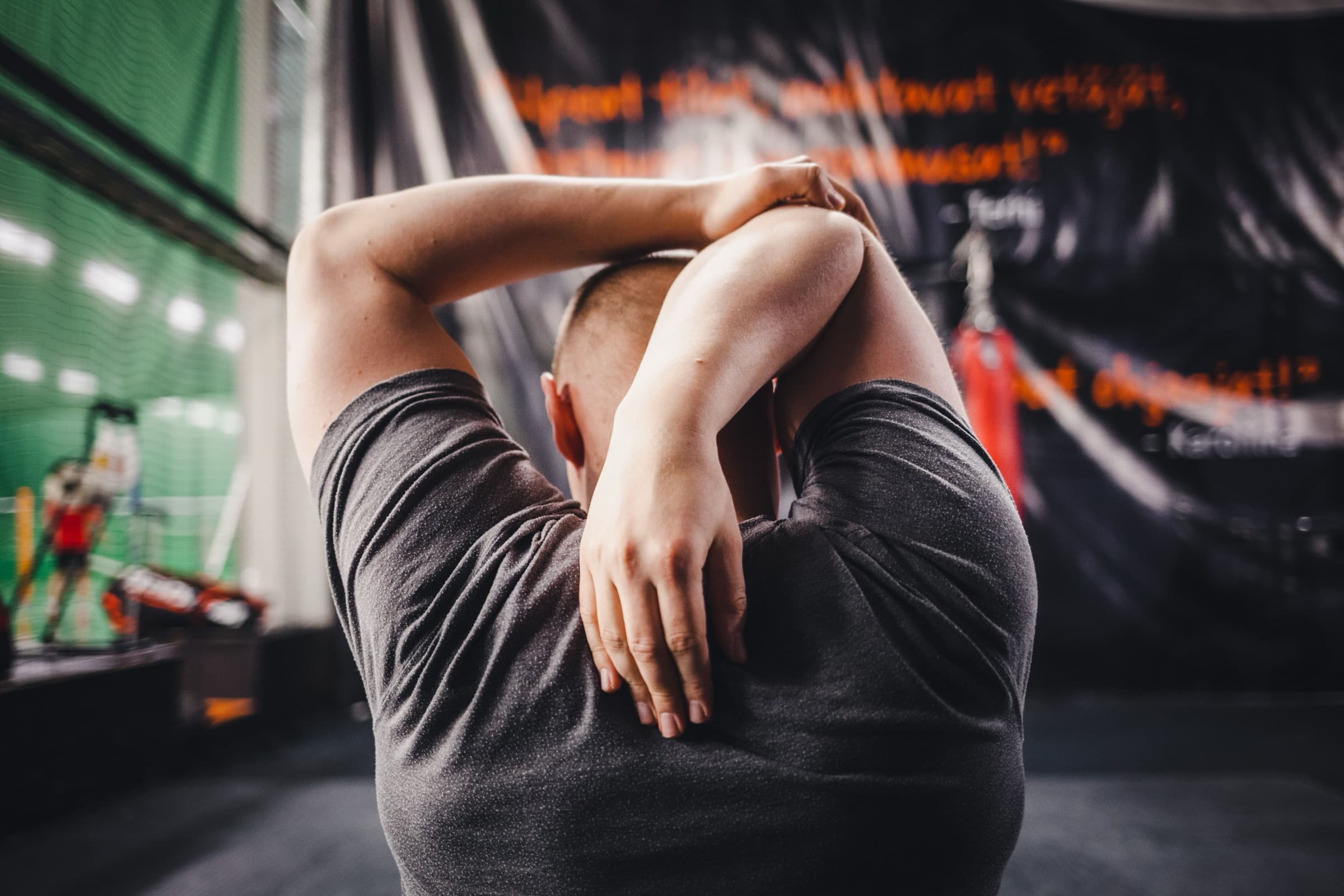
- 15 to 20 seconds of a gentle cross-body shoulder stretch per side
Use no weight, a very light band, or body control only. The goal is not to exhaust the shoulder before training. The goal is to remind the shoulder how to move before you ask more from it.
Rotator cuff warm-ups should feel controlled, light, and pain-free. Sharp pain, pinching, numbness, or worsening discomfort is a signal to stop.
How Often Should Beginners Stretch?
Beginners do not need a complicated routine.
Start with 5 to 10 minutes, two or three times a week. If it feels useful, build toward more regular short sessions. Harvard Health suggests stretching daily if possible, or at least several times per week, especially for areas that matter for everyday mobility.
The best routine is the one you can repeat without turning it into another pressure point.
That might mean:
- 5 minutes after a walk
- 3 stretches after a home workout
- a short evening mobility reset
- a gentle desk-break routine
- one longer session at the weekend
A short stretching routine done consistently is usually more useful than a perfect routine you never repeat.
This is where tracking can help without becoming noisy. If a user already tracks movement in Emorya, stretching can become a simple support habit around that movement: walk, cool down, stretch, repeat. The app does not need to make flexibility complicated. It can help users notice the routine and connect it to consistency.
A Simple Beginner Stretching Routine
A useful beginner routine should cover the areas most people notice in daily life: calves, hamstrings, hips, chest, shoulders, neck, and lower back.
Keep it gentle. Move into mild tension. Breathe normally. Do not bounce. Do not force pain. If the body feels cold, do a few minutes of light walking or movement first.
A simple routine could include:
- calf stretch
- hamstring stretch
- hip flexor stretch
- quad stretch
- chest opener
- shoulder stretch
- gentle neck rotation
- child's pose or another comfortable lower-back stretch
Hold each stretch for roughly 15 to 30 seconds, depending on comfort and guidance. Repeat one or two times if it feels good.
The right stretch should feel like mild tension, not a test of pain tolerance.
If a stretch causes sharp pain, numbness, tingling, dizziness, or a feeling that something is wrong, stop. More force is not better.
Where Stretching Fits With Walking and Fitness
Stretching is most useful when it supports the rest of the routine.
For someone building a walking habit, stretching can make the post-walk moment feel more complete. A few calm stretches after a walk can help the body transition from movement to recovery. It can also make tight calves, hips, or hamstrings easier to notice before they become reasons to skip movement.
For someone starting strength work, stretching can improve awareness of positions. Tight hips, shoulders, or ankles can make simple exercises feel awkward. Stretching will not replace strength, but it can help the body feel less restricted.
For someone who sits a lot, stretching can become an interruption to stiffness. It does not need to be athletic. A few minutes of standing, reaching, gentle hip movement, or calf stretching can turn "I should move more" into a small physical reset.
If walking is your main routine, Emorya's beginner walking plan is a good companion. If you are deciding what to track first, read Active Minutes vs Steps.
Stretching works best when it helps you keep moving, not when it becomes another fitness rule to fail.
How Emorya Fits Into Stretching
Emorya is built around everyday health behaviour, not only formal workouts.
That matters for stretching because flexibility habits are often quiet. They are not always dramatic enough to feel worth tracking, but they can support the routines people do track: steps, active minutes, walking, calorie awareness, body progress, and consistency.
In Emorya, stretching can sit around the main habit as a support layer. A user might stretch after a walk, after a simple home workout, or during a low-energy day when a full session feels unrealistic. That still counts as caring for the routine.
Rewards should stay in the background here. The reward layer can encourage return, but the reason stretching matters is health-first: movement should feel easier, recovery should feel calmer, and the user should feel more able to continue.
Emorya should make supportive habits easier to notice, not turn every stretch into a performance.
That is the calm product fit. Stretching does not need hype. It needs visibility, simplicity, and repetition.
Common Mistakes With Stretching
The first mistake is stretching cold muscles too aggressively.
Static stretching before the body is warm can feel responsible, but it is not always the right move. Start with light movement first.
The second mistake is bouncing. A stretch should be controlled. Bouncing can irritate tissue and makes it harder to understand what the body is actually tolerating.
The third mistake is chasing pain. Mild tension is enough. Pain is information. It is not proof that the stretch is working.
The fourth mistake is expecting instant flexibility. Flexibility changes slowly. One session may feel good, but lasting change needs repetition over weeks and months.
The fifth mistake is stretching instead of strengthening. If a position feels restricted, stretching may help, but weakness, balance, coordination, or injury may also be part of the picture.
Stretching should support the body, not become a fight with it.
Related Next Steps
If you want a simple strength routine alongside stretching, read Home Workouts for Beginners: Build Strength Without a Gym
If walking is your main movement habit, read Beginner Walking Plan: From 10 Minutes to One Hour a Day
If you want to understand daily movement metrics, read Active Minutes vs Steps: Which Should You Track First?
If consistency is the bigger challenge, read How Gamification Helps People Stay Consistent
Useful Sources
- Harvard Health: The importance of stretching
- Harvard Health: A flexible way to stretch
- NHS: Flexibility exercises
- NHS: How to stretch after exercising
- Mayo Clinic: Stretching, focus on flexibility
- AAOS: Rotator Cuff and Shoulder Conditioning Program
Common questions
Frequently asked questions
Short, practical answers for readers who want the direct version.
01Why is stretching important?
Stretching is important because it helps maintain flexibility and supports joint range of motion. That can make everyday movement, walking, exercise, and basic positions feel easier. It is most useful when done consistently and safely.
02Should beginners stretch every day?
Beginners can stretch every day if it feels good, but they do not need to start there. A few short sessions per week is a realistic beginning. The goal is to build a repeatable routine, not to force a perfect daily habit immediately.
03Is it better to stretch before or after exercise?
For most beginners, it is better to warm up with light movement before exercise and use slower static stretching after exercise. Stretching cold muscles aggressively can be unhelpful or risky.
04How long should I hold a stretch?
Many beginner stretches are held for around 15 to 30 seconds. The exact time depends on the stretch, your comfort, and your body. The stretch should feel like mild tension, not pain.
05Can stretching prevent injuries?
Stretching may support flexibility and range of motion, but it should not be treated as a guaranteed injury-prevention tool. Strength, warmups, training load, recovery, sleep, technique, and health context all matter too.
06How should beginners warm up the rotator cuff?
A beginner rotator cuff warm-up should be light, controlled, and pain-free. Start with easy arm circles, shoulder blade squeezes, gentle external rotations with elbows tucked close to the body, and a short cross-body shoulder stretch. Use no weight, a very light band, or body control only.
07What should I do if stretching hurts?
Stop if stretching causes sharp pain, numbness, tingling, dizziness, or worsening discomfort. If pain continues or you are recovering from injury, speak with a healthcare professional or physiotherapist.
08How can Emorya help with stretching?
Emorya can help users place stretching inside a wider routine by making movement, consistency, milestones, and progress easier to see. Stretching should remain a simple support habit, not another source of pressure.
Conclusion
Stretching matters because movement matters.
It helps keep flexibility in the conversation alongside walking, strength, active minutes, recovery, and consistency. It gives beginners a calm way to support the body without needing a complicated programme or a gym.
The useful approach is simple: warm up first, stretch gently, avoid pain, repeat often enough to notice the pattern, and keep the habit connected to real life.
Stretching is not about becoming perfectly flexible. It is about keeping movement available.
If you want to build from stretching into a fuller routine, start with Home Workouts for Beginners or Beginner Walking Plan.
Learn how Emorya makes everyday movement more rewarding, without turning it into another noisy fitness app.